
Avoiding Surprises: Screening Applicants for Sex Offender Registration Status
When searching an applicant’s name in Oregon’s Sex Offender Registry database, you may notice a disclaimer at the bottom of the page: “1,961 sex offenders are on this site; 32,547 are NOT” (at time of writing). Unlike other criminal databases, sex offender registries make information public or not based on the level of the offender. This means approximately 94% of registrants are not verifiable for the general public, and it takes deeper investigation to ensure an applicant’s registration status does not go unnoticed.
Levels of Publicly Available Information
Oregon determines a registrant’s Level of Notification via the Static-99R assessment for men, and via in-person evaluation for women, juveniles, and others. Based on the results, the registrant is then organized into one of three levels:
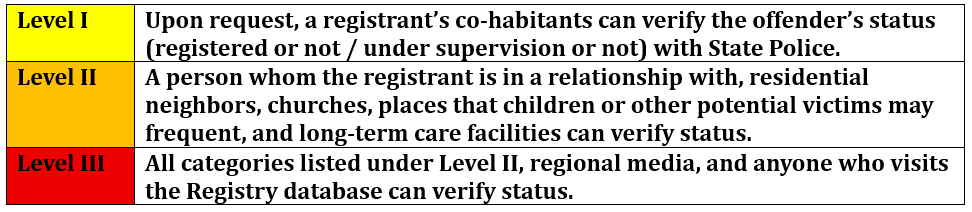
In Oregon (and many other states like California and Washington), this means ONLY Level III offenders are visible to the public. Others can only be verified by emailing the Oregon State Police to confirm, and the status is still only disclosed if the request “demonstrate[s] a sufficient public safety necessity for release of information.”
How Bemrose Prevents Missed Registration
Bemrose screening agents are especially thorough in their criminal searches. We search every state the applicant is known to have resided in, worked in, or have emergency contacts listed in, along with those states’ registries and the National Registry. If we uncover or suspect a sex offense in the applicant’s history, but they are not listed publicly, we contact State Police and local Sheriff offices to confirm their status. We do this for no extra cost, whereas screening software and other screening companies require a fee for additional jurisdictions. Because Bemrose falls under the Housing category, Oregon State Police consider our request to be “a sufficient public safety necessity” and are required to disclose the status.
Tenants’ active registration status greatly affects the safety and reputation of your property, but it is often more difficult to confirm than simple screening software or the public can manage on their own. It requires the expertise to know which authorities to contact, patience to search many jurisdictions, and authorization to receive information. It’s crucial to have a screening partner who understands the impact a label like “Registered Sex Offender” can have on your business, and who will meticulously investigate to ensure you are notified of an applicant’s status and can make an informed decision, every time.
For more on individual states’ registration requirements, we recommend: State and Territory SORNA Implementation Progress Check.
DISCLAIMER: READ CAREFULLY: The information provided in this article is not considered legal advice and is given only for information purposes. ALWAYS SEEK THE ADVICE OF YOUR LEGAL COUNSEL.